September Coffee Club
Out of stock
Pickup currently unavailable
Ethiopia Galcha Kindu (250g)
Process: Anaerobic Black Honey
Varietal: Heirloom
Altitude: 2100 - 2350 MASL
Tasting notes: Pineapple, Juniper, Passionfruit
This anaerobic black honey process is from Gelcha Kindu station in Gediyo, Gedeb. Gelcha Kindu was established in 2022 by Gargari Gutity Washed Station PLC, a sister company of Primrose Coffee, one of our export partners.
The station works with a community of 2400 farmers. It boasts 280 shaded drying beds and produces multiple processes, from classic fully washed and raised bed naturals through to Anaerobic, Supernatural and Carbonic Maceration.
The smallholder farmers in this region cultivate 74110, 74112 and 74165 Jarc varieties (catalogued by the Jimma Agricultural Research Centre) on small plots of land around their house. Hence, these plots are colloquially known as 'garden coffee'.
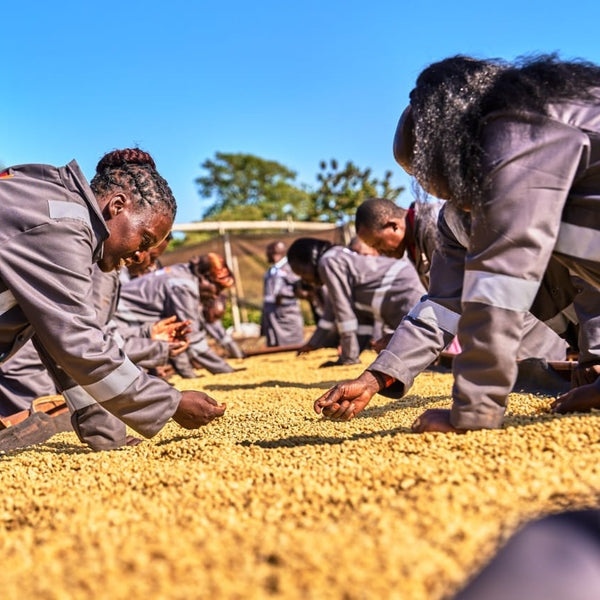
For this anaerobic black honey process, ripe cherries are selectively harvested and carefully sorted before de-pulping, with approximately 90% of the mucilage retained. The coffee then undergoes a 72 hour anaerobic fermentation in sealed tanks, after which it is dried slowly on shaded, raised beds. During this time it is regularly turned to promote even drying to a moisture content of 10-12% before resting, milling and grading.
Kenya Eaagads AA (250g)
Process: Washed
Varietal: Acaia, K7, Ruiru 11, SL28
Altitude: 1400 - 1600 MASL
Tasting notes: Blackcurrant, Orange, Nougat
This farm lies in Ngoingwa location, Kiambu County - an area well-known as home to some of the earliest coffee farms in the country.
Kiambu has all the ingredients for arabica coffee to flourish: it is close to the equator, has iron rich, semi-volcanic soils, abundant sunshine and consistently high altitudes. The cool night time temperatures in these fertile highlands allows cherries to mature slowly, developing the acidity and complexity in the final cup.
This lot employs a traditional Kenyan fully washed process, which is seen throughout Kenya's specialty coffee regions and is supported by many generations of shared knowledge and skill.
Selected cherries are pre-graded and then de-pulped. The pulped coffee is then fermented for 12 - 48 hours in water tanks to breakdown the remaining mucilage on the bean. After fermentation the coffee, still in its husk (parchment) is washed in clean water grading channels. This series of declining channels allows the heaviest, densest beans to sink. These are processed separately as they represent the highest quality beans. After washing the parchment is soaked in clean water and then dried in the sun on raised African beds for 2-3 weeks where it is periodically turned and covered to protect against moisture or the heat of the midday sun.
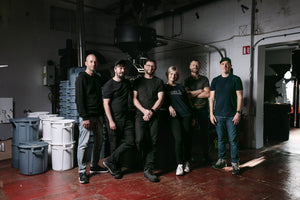
Our Story
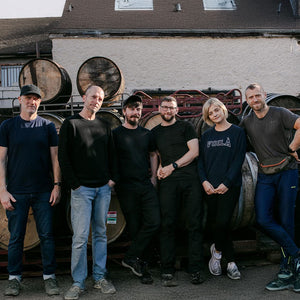
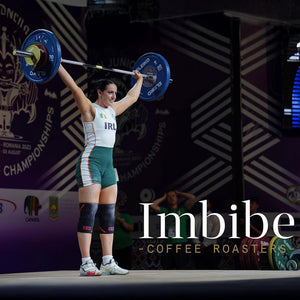
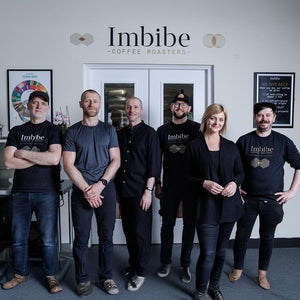
We are an Irish coffee roasting business. We have roasted coffees from producers that are genuinely world renowned and whose coffees are frequently used on both a national and international competition stage. We feel we have the quality side of coffee sorted but our business is about a lot more than just selling coffee for profit.
Faqs
Ordering & Business Info
What are your hours of business?
We open from 8 a.m. until 4 p.m. from Monday to Thursday and close at three on Friday's. We are closed on Bank Holidays and weekends.
I’ve ordered online. When will my coffee arrive?
If you're in the local area, we'll deliver it to you the next day. If you order online, you will get a tracking link from our third-party courier service. Our courier collects from the roastery each day around 10 a.m. and our aim to to have any orders from the previous day ready for them to collect.
Do you have a physical coffee shop?
I'm afraid not. We're a roastery and not a cafe. You can collect beans you purchase online from us but we don't sell coffee or take cash on our premises.
Do you sell dark roast coffee?
No, unfortunately, we don't, and we're not saying there's anything wrong with it. It's all about personal preference.
At Imbibe, we prefer to roast to a light-light/Medium roast profile, which brings out the complexity and character of the beans.
Brewing & Recommendations
What’s the best option for espresso?
We would always recommend Kaleidoscope as our flagship coffee, Boa Sopa would be a staff favourite, but any of our certified organic coffees are the ones best suited for espresso.
How should I make this coffee at home?
There are no hard and fast rules or wrong answers here. If you've chosen a blend, then we feel it's suitable for all brew methods, particularly espresso. If you have chosen one of our single origins, we recommend a filter or immersion method of brewing, but this doesn't mean you can't use it for espresso! You can visit our brewing videos section to give you an idea as to how you can best enjoy these coffees at home.
Coffee Knowledge
What’s a coffee variety/varietal?
A coffee varietal is like the "breed" or "type" of a coffee plant. Just like there are different kinds of apples ( Granny Smith, Pink Lady, Honeycrisp) that taste a bit different, there are different kinds of coffee plants, each with its own flavour, size, and growing needs. Examples of coffee varietals INCLUDE Typica, Bourbon, Gesha and Caturra, each with its own distinct flavour profile and characteristics.
What does “process” mean in coffee descriptions?
In coffee, "process" means the way the coffee beans are removed from the fruit (the coffee cherry) after harvesting. The chosen method has a big impact on coffee flavour.
The main processing methods are
- Washed (wet) Process- Cherries are pulped to remove the skin and most of the fruit, then fermented to break down remaining mucilage, washed with water, and dried. This tends to produce a clean, bright, and vibrant flavour profile.
- Natural(Dry)Process- Whole cherries are dried intact, allowing sugars and flavours from the fruit to infuse into the beans. This often results in a sweeter, heavier-bodied cup with a fruity, sometimes wine-like profile.
- Honey (Pulped Natural) Process- The skin is removed, but some fruit remains on the bean during drying, creating a flavour profile between washed and natural - often sweet, smooth, and with balanced acidity.
Over the years, experimental coffee processing methods have gained in popularity (anaerobic, carbonic, etc.)
They are based on the traditional main methods -washed, natural, or honey - with extra steps to create distinctive flavours.
Are all coffees blends?
No. Coffees that are blends have two or more countries or origins on the bag and can contain many coffee varieties. Single-origin coffees are generally one or more varieties of coffee grown in a specific region or country that will highlight a flavour profile from that specific region. Just because you've tried one "Colombian" coffee doesn't mean that you've tried them all. Coffee is an ever-changing drink that yields a unique flavour profile each harvest cycle, so we recommend you try many different coffees from many different origins to find the flavours you like most.