

Costa Rica La Bandera
In stock
Pickup currently unavailable
In the Tarrazú region, the mountainous terroir of Dota is known for its high altitude, fertile soils, and cool microclimates. This is where La Bandera is located, the farm owned by the Hidalgo Umaña family.
After spending more than 14 years in the United States, Diego Hidalgo returned to Costa Rica with his family to invest in Beneficio La Bandera and develop a structured coffee-growing project. The farm covers approximately 2 hectares dedicated to various microlots and varieties, including Typica, a historic variety that has become increasingly rare in the region.
La Bandera benefits from an environment directly influenced by the winds coming from Cerro de la Muerte, a natural feature that creates favorable conditions for coffee cultivation. The farm is managed under complex agroforestry (level 2), with diversified shade. It also includes protected areas and natural springs, whose preservation plays an important role in the management of the site.
Our tasting/cupping notes for this second coffee come from our Q Grader, Monika. She'll always find at least 7 or 8 aromas, taste notes etc and then select the three she finds most pronounced to put on our bags. For this coffee she selected Pear, Mango and Brown Sugar.
Process
Natural
Varietal
Typica
Altitude
1950 MASL
Tasting Notes:
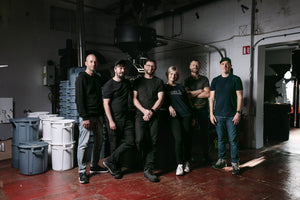
Our Story
We are an Irish coffee roasting business. We have roasted coffees from producers that are genuinely world renowned and whose coffees are frequently used on both a national and international competition stage. We feel we have the quality side of coffee sorted but our business is about a lot more than just selling coffee for profit.
Faqs
Ordering & Business Info
What are your hours of business?
We open from 8 a.m. until 4 p.m. from Monday to Thursday and close at three on Friday's. We are closed on Bank Holidays and weekends.
I’ve ordered online. When will my coffee arrive?
If you're in the local area, we'll deliver it to you the next day. If you order online, you will get a tracking link from our third-party courier service. Our courier collects from the roastery each day around 10 a.m. and our aim to to have any orders from the previous day ready for them to collect.
Do you have a physical coffee shop?
I'm afraid not. We're a roastery and not a cafe. You can collect beans you purchase online from us but we don't sell coffee or take cash on our premises.
Do you sell dark roast coffee?
No, unfortunately, we don't, and we're not saying there's anything wrong with it. It's all about personal preference.
At Imbibe, we prefer to roast to a light-light/Medium roast profile, which brings out the complexity and character of the beans.
Brewing & Recommendations
What’s the best option for espresso?
We would always recommend Kaleidoscope as our flagship coffee, Boa Sopa would be a staff favourite, but any of our certified organic coffees are the ones best suited for espresso.
How should I make this coffee at home?
There are no hard and fast rules or wrong answers here. If you've chosen a blend, then we feel it's suitable for all brew methods, particularly espresso. If you have chosen one of our single origins, we recommend a filter or immersion method of brewing, but this doesn't mean you can't use it for espresso! You can visit our brewing videos section to give you an idea as to how you can best enjoy these coffees at home.
Coffee Knowledge
What’s a coffee variety/varietal?
A coffee varietal is like the "breed" or "type" of a coffee plant. Just like there are different kinds of apples ( Granny Smith, Pink Lady, Honeycrisp) that taste a bit different, there are different kinds of coffee plants, each with its own flavour, size, and growing needs. Examples of coffee varietals INCLUDE Typica, Bourbon, Gesha and Caturra, each with its own distinct flavour profile and characteristics.
What does “process” mean in coffee descriptions?
In coffee, "process" means the way the coffee beans are removed from the fruit (the coffee cherry) after harvesting. The chosen method has a big impact on coffee flavour.
The main processing methods are
- Washed (wet) Process- Cherries are pulped to remove the skin and most of the fruit, then fermented to break down remaining mucilage, washed with water, and dried. This tends to produce a clean, bright, and vibrant flavour profile.
- Natural(Dry)Process- Whole cherries are dried intact, allowing sugars and flavours from the fruit to infuse into the beans. This often results in a sweeter, heavier-bodied cup with a fruity, sometimes wine-like profile.
- Honey (Pulped Natural) Process- The skin is removed, but some fruit remains on the bean during drying, creating a flavour profile between washed and natural - often sweet, smooth, and with balanced acidity.
Over the years, experimental coffee processing methods have gained in popularity (anaerobic, carbonic, etc.)
They are based on the traditional main methods -washed, natural, or honey - with extra steps to create distinctive flavours.
Are all coffees blends?
No. Coffees that are blends have two or more countries or origins on the bag and can contain many coffee varieties. Single-origin coffees are generally one or more varieties of coffee grown in a specific region or country that will highlight a flavour profile from that specific region. Just because you've tried one "Colombian" coffee doesn't mean that you've tried them all. Coffee is an ever-changing drink that yields a unique flavour profile each harvest cycle, so we recommend you try many different coffees from many different origins to find the flavours you like most.